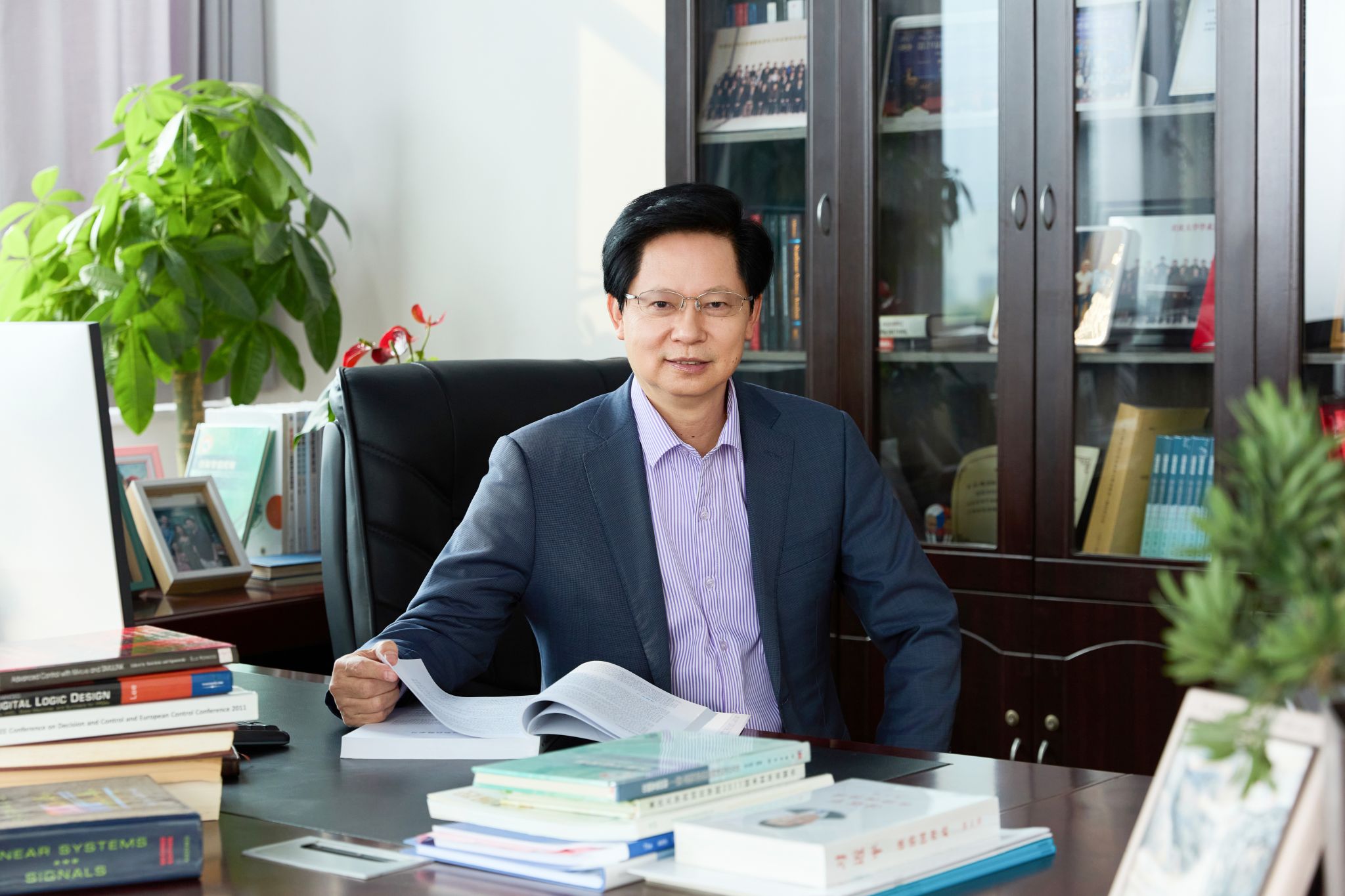
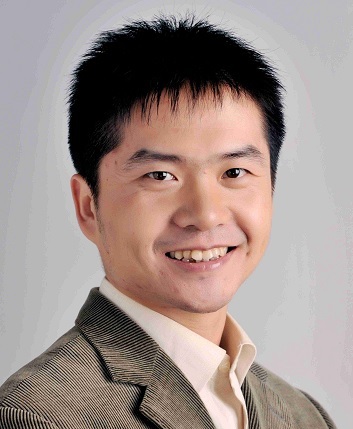
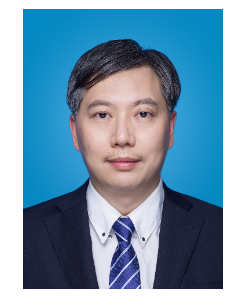
Zhao Yanlong, Male, Professor at the Academy of Mathematics and Systems Science, Chinese Academy of Sciences. He serves as Chair of the Technical Committee on Control Theory, Chinese Association of Automation, Recipient of the National Science Fund for Distinguished Young Scholars, and President-Elect of the Asian Control Association. He is an Editorial Board Member of internationally renowned journals includingAutomatica,SIAM Journal on Control and Optimization, andIEEE Transactions on Systems, Man, and Cybernetics: Systems. He was awarded the Second Prize of the National Natural Science Award (3rd contributor) and the First Prize of the Natural Science Award from the Chinese Association of Automation (1st contributor). He received his B.S. degree from the School of Mathematics and Systems Science, Shandong University in 2002, and his Ph.D. degree from the Academy of Mathematics and Systems Science, Chinese Academy of Sciences in 2007. He conducted postdoctoral research at Wayne State University (USA) and Nanyang Technological University (Singapore), and was a visiting scholar at Linköping University (Sweden). His professional career includes appointments as Assistant Professor and Associate Professor. His long-term research interests lie in identification and adaptive control of set-valued nonlinear systems, financial system modeling, communication networks, and systems biology. He currently recruits graduate students majoring in Systems Theory, Operations Research and Cybernetics, Communication and Information Systems, with research focuses on communication and information systems, identification and adaptive control of set-valued systems, and financial system modeling. |
Su Housheng is a Level-2 Professor, PhD Supervisor, and Chair of the Department of Intelligent Systems and Systems Engineering, School of Artificial Intelligence and Automation, Huazhong University of Science and Technology (HUST). He is a recipient of the National Science Fund for Distinguished Young Scholars and selected for the National Young Top-Notch Talents Program of the “Ten Thousand Talents Plan”. He also serves as Deputy Director of the Engineering Research Center of Autonomous Intelligent Unmanned Systems, Ministry of Education. He received his PhD degree from Shanghai Jiao Tong University in 2008. His research focuses on cooperative control theory of multi-agent systems and its applications in the coordinated control of unmanned surface vehicle (USV) swarms. Driven by frontier scientific issues and major application demands of unmanned swarm collaboration, he has made a series of outstanding achievements in cooperative control theory and its engineering applications in USV swarm coordination. His academic honors include the Second Class Prize of the State Natural Science Award, the First Class Prize of the Natural Science Award of the Ministry of Education, the First Class Prize of Hubei Natural Science Award, and the First Class Prize of Guangdong Technological Invention Award. He is a Highly Cited Researcher (Clarivate Analytics), a Highly Cited Chinese Researcher (Elsevier), and has been listed among the World’s Top 0.05% Scientists by ScholarGPS and the World’s Top 2% Scientists by Stanford University. He also leads an Innovative Research Group in Hubei Province, is a recipient of the Hubei Science Fund for Distinguished Young Scholars, and was selected for the Program for New Century Excellent Talents in University of the Ministry of Education. Prof. Su has presided over 8 projects of the National Natural Science Foundation of China and 1 key international cooperation project under the National Key R&D Program of China. He serves as a panel reviewer for talent programs of the Ministry of Science and Technology, a panel reviewer for the Information Science Department of the National Natural Science Foundation of China, and an external reviewer for the Research Grants Council (RGC) of Hong Kong. He has published more than 300 peer-reviewed papers in SCI journals, including over 30 ESI Highly Cited Papers and more than 100 papers in IEEE Transactions journals. He is an Associate Editor of IEEE Transactions on Systems, Man and Cybernetics: Systems and other international journals. |